8 hr
Boyne Valley Day Trip: Newgrange & Battle of the Boyne
Journey through 5,000 years of Irish history from Neolithic tombs to pivotal 17th-century battles
Reserve
Hand-picked by our editors — only the best 5 experiences from 140 reviewed.
Verified partners for every tour, free cancellation where available, and instant confirmation on every booking.
8 hr
Journey through 5,000 years of Irish history from Neolithic tombs to pivotal 17th-century battles
Reserve
10 hr
Journey through 5,000 years of Irish history across Neolithic tombs, royal hills, and medieval ruins
Reserve
6 hr
Journey through 5,000 years of Irish history at two of the Boyne Valley's most sacred ancient sites
ReservePrices from verified partners. Availability updates in real time at checkout. Free cancellation policies apply where shown.
The landmarks, rooms, and views travelers on this tour remember — all visible on a single visit.
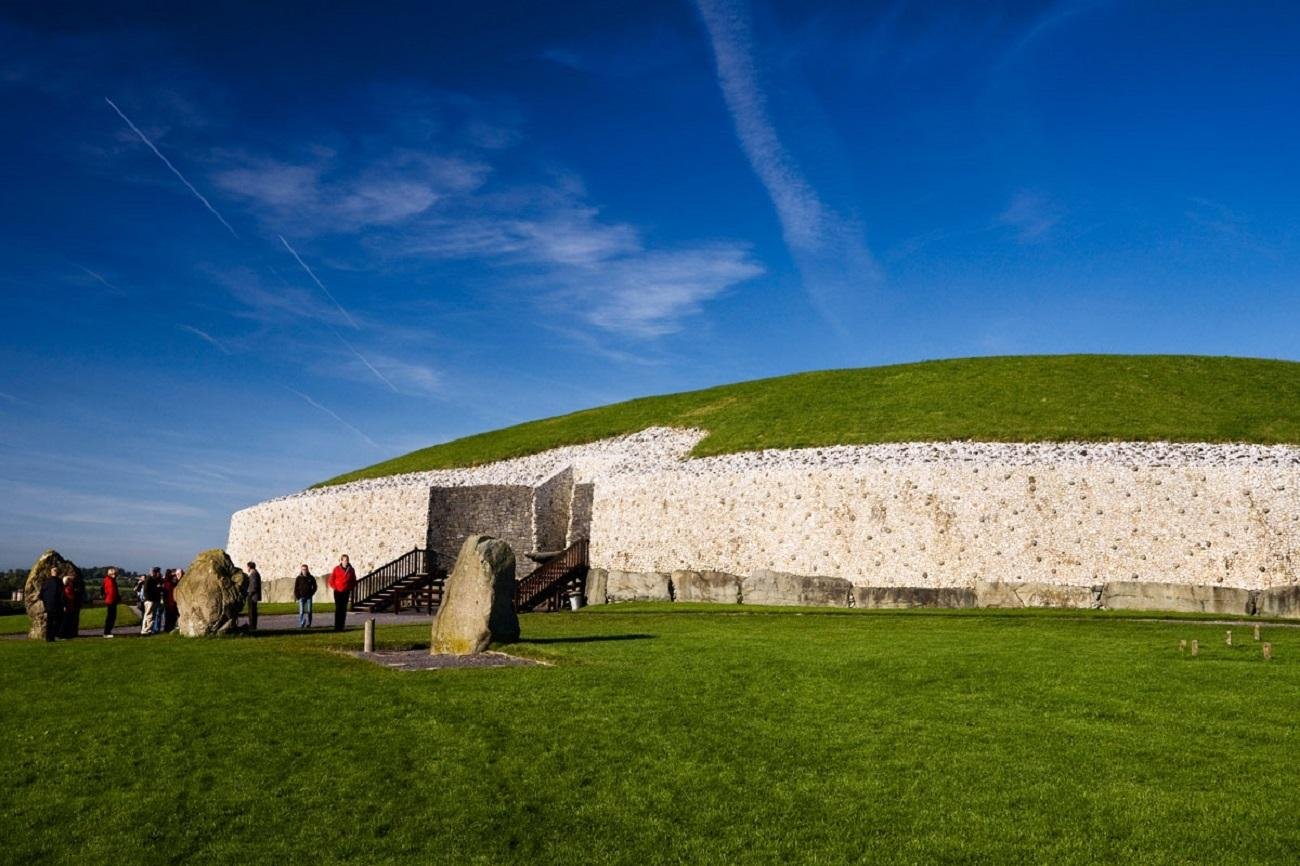
The 3200 BC monument features a corbelled roof that remains watertight after 5,000 years.
Newgrange offers a precise Neolithic tomb experience, while the Hill of Tara provides an expansive look at a ceremonial royal site; combining both is the most effective way to grasp the depth of Irish landmarks.
| Feature | Top pick Brú na Bóinne | Hill of Tara |
|---|---|---|
Nature of site |
Neolithic chambered cairn | Ceremonial royal landscape |
Inside access |
Chamber entry via guided tour | Exterior viewing only |
Physical terrain |
Gravel paths and incline | Grassy undulating hills |
Primary focus |
Passage tomb astronomy | Ancient political power centers |
Visitor structure |
Managed visitor centre required | Open-access public site |
Booking |
18 EUR tickets required | Free public entry |
| See tickets → |
Verdict: Securing newgrange and hill of tara tour from dublin tickets allows for a structured visit to the tomb, balanced by the self-guided freedom found at the nearby royal seat.
Choose your ticket, select your date, and reserve in under two minutes. Secure checkout handled by our verified partner.
Instant confirmation by email, with a mobile voucher you can save offline. No printing, no queuing at a collection desk.
Arrive at the entrance, show your voucher on your phone, and walk in. Most tickets include priority or skip-the-line access.
Practical details for your visit straight from our verified partners — hours, access, rules, and how to get there.
Donore, Drogheda, Co. Meath, A92 EH5C
All shuttle buses to monuments depart from here.
Follow the M1 motorway north to the Donore exit and follow signs for Brú na Bóinne.
Seasonal bus services run from Drogheda bus station to the Visitor Centre.
Wear comfortable walking shoes and weather-appropriate layers, as tours involve significant outdoor walking and time spent in the open landscape.
Large bags are discouraged as space on the shuttle buses is limited. Security is managed by the Office of Public Works; follow all guide instructions.
Photography is strictly prohibited inside the Newgrange passage and chamber to preserve the site and ensure visitor safety.
The Visitor Centre is accessible, but specific access to the monuments requires advance coordination due to the historic nature of the structures.
All children and infants require a pre-booked ticket for site access. Unaccompanied minors under 18 years are not permitted.
Tea rooms are located at the Brú na Bóinne Visitor Centre. Eating is not permitted inside the prehistoric monuments.
Donore, Drogheda, Co. Meath, A92 EH5C
All shuttle buses to monuments depart from here.
Get directionsBest time to go, insider tips, nearby landmarks, and the cancellation fine print — flip through to skim what matters to you.
How crowds, weather, and events shift across the year.
High demand; early arrival between 09:00–11:00 is essential to secure tickets.
Milder weather and fewer crowds compared to peak summer months.
Cooler temperatures; ideal for walking the landscape trails.
Limited tours available; must book at least 7 days in advance.
Small details that turn a good visit into a great one.
Tickets for a newgrange and hill of tara tour from dublin sell out weeks in advance; book as soon as your dates are confirmed.
Access to the monuments is exclusively via the visitor centre shuttle; direct arrival leads to denied entry.
If sold out, check the website at 08:30 or 15:00 for released tickets.
The Irish weather can change quickly during your newgrange and hill of tara tour from dublin.
The Newgrange and Knowth sites are fragile; remain with your guide at all times.
Allow time to see the visitor centre display before your scheduled shuttle time.
Non-bookable sights within a short walk — free to visit, easy to pair.
The first Cistercian abbey in Ireland featuring unique architectural ruins.
Famous for its high crosses, particularly the tall Muiredach's High Cross.
A historic site with panoramic views of the Boyne Valley.
Site of the 1690 conflict that shaped Irish history.
Flexible, no hidden fees.
Tickets are strictly non-transferable and subject to limited availability. Please refer to the official booking system for refund eligibility regarding the 18 EUR entrance fee.
Hand-picked options within walking distance — pick a district for vibe, or a specific hotel for convenience.
Convenient access to local amenities and the visitor centre.
Unique stay in the heart of the Boyne Valley.
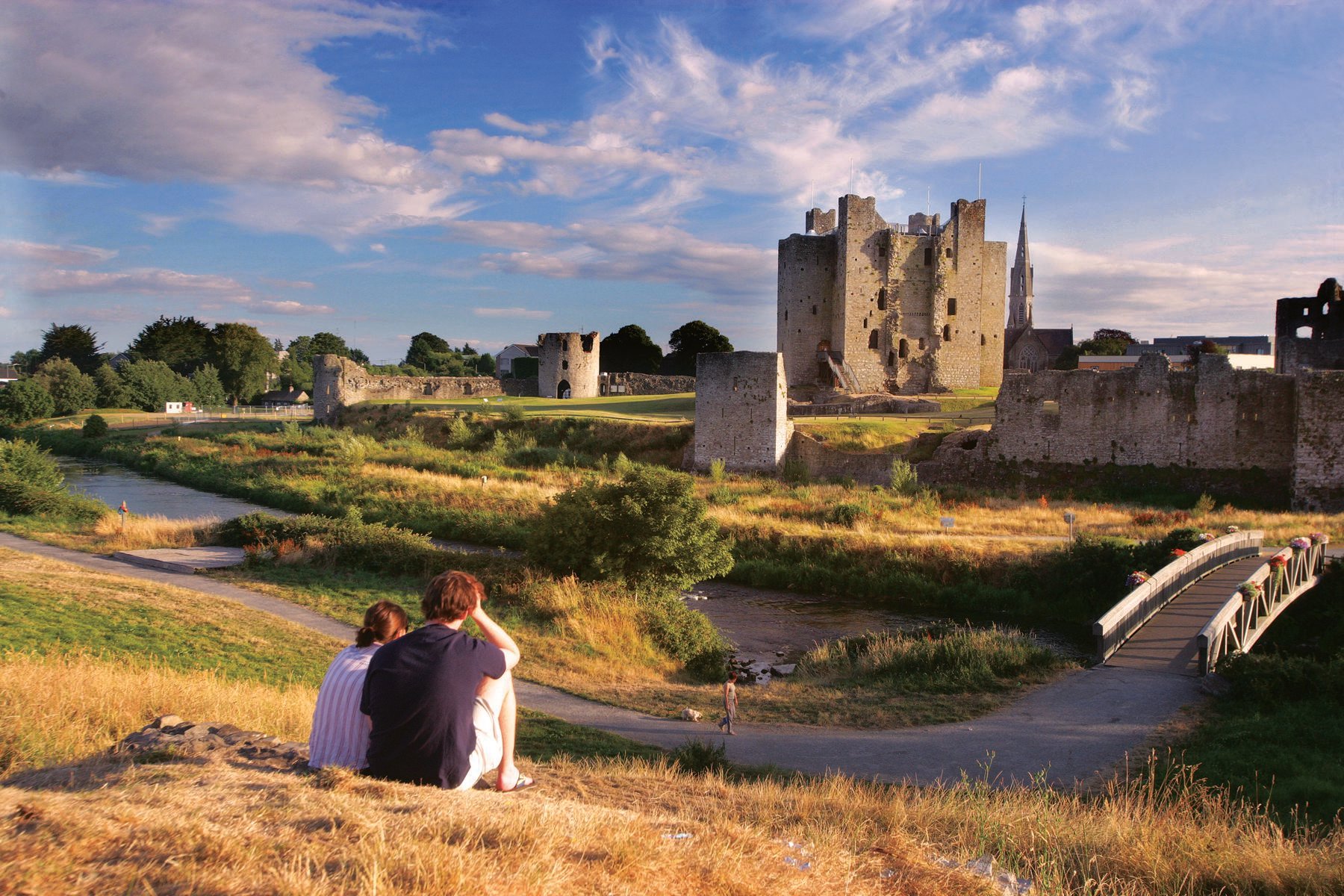
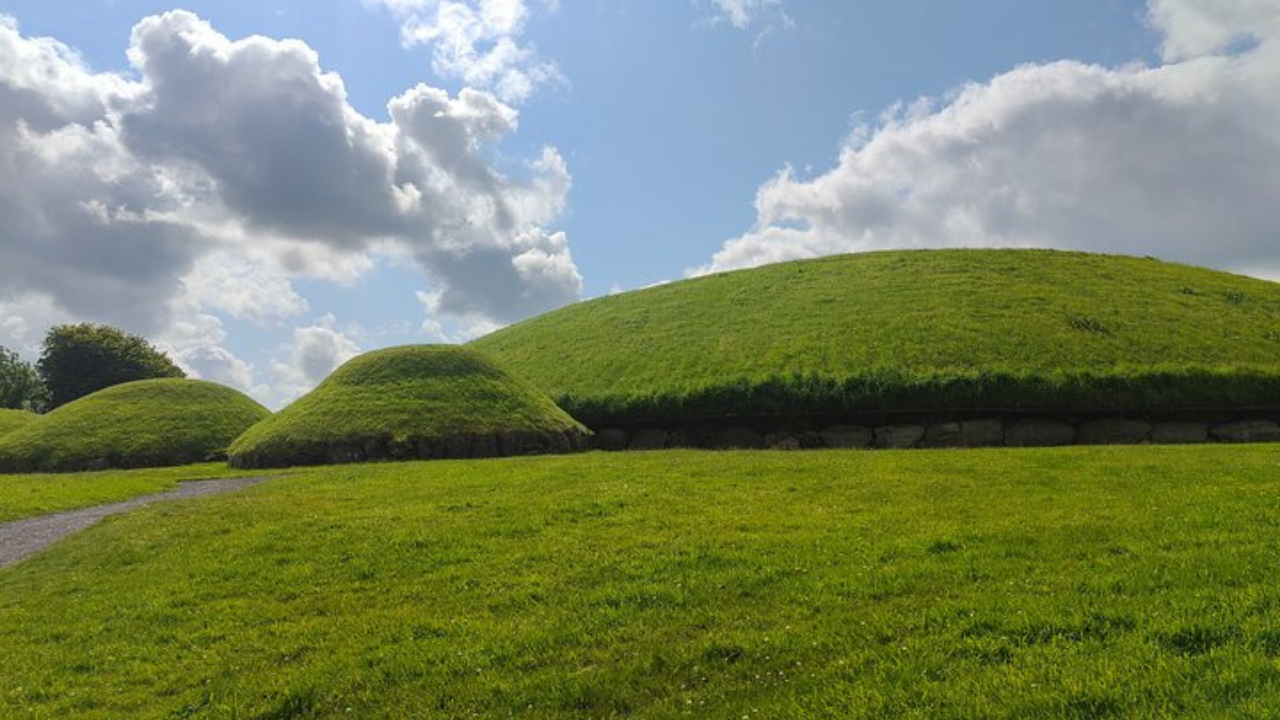
Newgrange was sealed for roughly four thousand years before a Meath landowner's workmen, quarrying for stone in 1699, broke into its entrance and found a corridor running into the mound. The tomb they stumbled on predates Stonehenge by about five centuries and the pyramids at Giza by more than five. A newgrange and hill of tara tour from dublin traces that accidental rediscovery in reverse, moving from a modern visitor centre at Donore back through the Boyne bend to a monument raised around 3200 BC. The builders were farmers. They cut turf, hauled greywacke and quartz, and assembled a mound roughly 85 metres across from an estimated 200,000 tonnes of material, some of it carried from the Wicklow coast and the Mourne foothills. Their corbelled roof, laid without mortar, has kept the inner chamber dry for five millennia. Above the entrance sits the roof-box, a slot of quartz-framed stone aligned so that at the winter solstice a blade of sunrise travels 19 metres along the passage and reaches the rear recess. Nothing about that alignment is accidental. The kerbstones carry lozenges, chevrons and triple spirals — the densest concentration of Neolithic megalithic art in western Europe, and part of why the Brú na Bóinne complex, with Knowth and Dowth, was inscribed by UNESCO in 1993. Twelve kilometres south-west, the Hill of Tara answers the tomb with politics rather than burial. Its low ridge holds the Mound of the Hostages, a passage grave older than the earthworks around it, and the Lia Fáil, the standing stone said to cry out beneath a rightful king. Tara was the ceremonial seat of the High Kings, a place of assembly and law rather than defence, and the reason so many dublin boyne valley guided day tour itineraries pair the two: one site made for the dead, the other for the living who claimed authority over them. Guided newgrange and hill of tara tour from dublin tours exist because the chamber cannot be entered independently. Access runs through the Brú na Bóinne Visitor Centre at Donore, Drogheda, Co. Meath, A92 EH5C, where the 18 EUR Brú na Bóinne Tour including Newgrange Chamber access, per adult, covers the shuttle and the escorted entry. Combination itineraries — the Boyne Valley day trip taking in the Battle of the Boyne site, the Celtic ancient sites tour, the private option — differ in what they add around that fixed core. The corridor itself has not changed since the Neolithic. Everything else is arrangement.
"One site was made for the dead, the other for the living who claimed authority over them."
A step-by-step walkthrough of the visit — what you'll see, how long each stage takes, and the details that matter.
You leave Dublin in the early morning and reach Donore inside the 09:00–11:00 arrival window, which is when limited shuttle slots are still open and the afternoon coach traffic has not yet built. Doors open at 09:00. You collect your timed ticket, cross the footbridge over the Boyne, and wait for the minibus that carries visitors the last stretch to the mound. You step off beside the great kerbstone, K1, its triple spiral cut so deep you can lay a finger in the groove. The white quartz facade rises behind it. A guide counts your group down to about twenty and you enter single file, turning your shoulders where the orthostats narrow. Nineteen metres in, the passage opens into a cruciform chamber and you look up six metres to a corbelled ceiling that has never leaked. The lights go out. A simulated solstice beam crawls along the floor toward the rear recess, and for perhaps ninety seconds nobody speaks. Back outside you have the Boyne bend below you and the rest of the day ahead. On a full newgrange and hill of tara tour from dublin you continue south-west to the royal hill, walk the grassy banks of the Ráth na Ríogh, put a hand on the Lia Fáil, and look out — on a clear summer afternoon — across a claimed one-third of Ireland. You are back in the city by evening, boots muddy.
You must pre-book tickets online via the official heritage site to guarantee your spot on a newgrange and hill of tara tour from dublin.
No, you must check in at the Brú na Bóinne Visitor Centre as all access is via official shuttle bus.
Yes, all visitors including children must have a ticket, and unaccompanied minors under 18 are not permitted.
The entrance fee is 18 EUR for the Brú na Bóinne Tour including Newgrange Chamber access.
Photography is strictly prohibited inside the Newgrange chamber, though it may be permitted in outdoor areas.
We recommend an arrival window of 09:00–11:00 to avoid peak crowds and ensure you make your shuttle slot.
There are tea rooms at the visitor centre, but no food is allowed inside the prehistoric monuments.
The visitor centre is accessible, but you should email brunaboinne@opw.ie in advance if you require special assistance.
Yes, many visitors combine the tour with the Hill of Tara, which is included in many organized day trips from Dublin.